Recently, the design and implementation of the science popularization installations for the "2025 Shunyi District Hanshiqiao Municipal Wetland Nature Reserve Protection and Management Improvement Project" came to a successful conclusion. The project was led by Yang Yichen and Liu Rui, responsible planners for the Hanshiqiao Wetland and faculty members of our university, with full participation from students of the Urban and Rural Planning Studio in the School of Urban Construction.
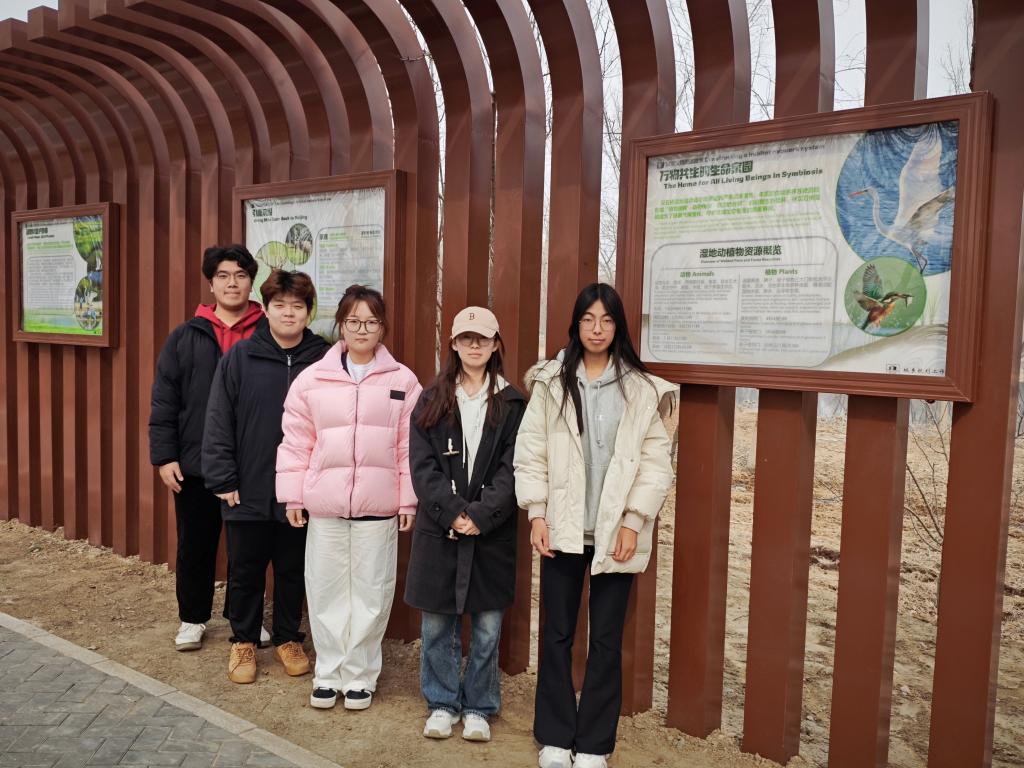
Throughout the design process, the team adhered to the principles of "adapting to local conditions and tailoring education to different audiences." Combining the actual needs of Hanshiqiao Wetland, they created differentiated science popularization content for various groups. For teenagers, the team used vivid and engaging formats with illustrations to introduce wetland plants such as reeds, cattails, and yellow floating-heart, as well as the habits of common birds like mallards, common moorhens, and little grebes. For the general public, the focus was placed on explaining the functions of the wetland ecosystem and the purification effects of reclaimed water plants and subsurface flow wetlands on sewage. For professional enthusiasts, the content was supplemented with information on bird migration patterns and wetland ecological restoration techniques, achieving comprehensive and precise science communication.
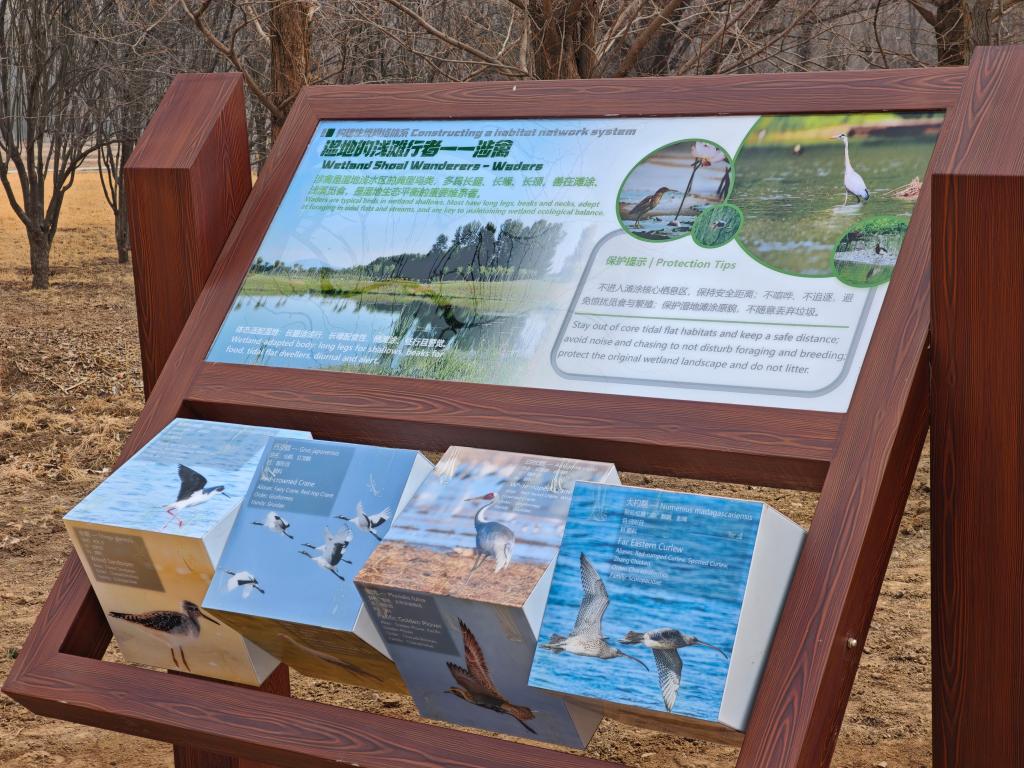
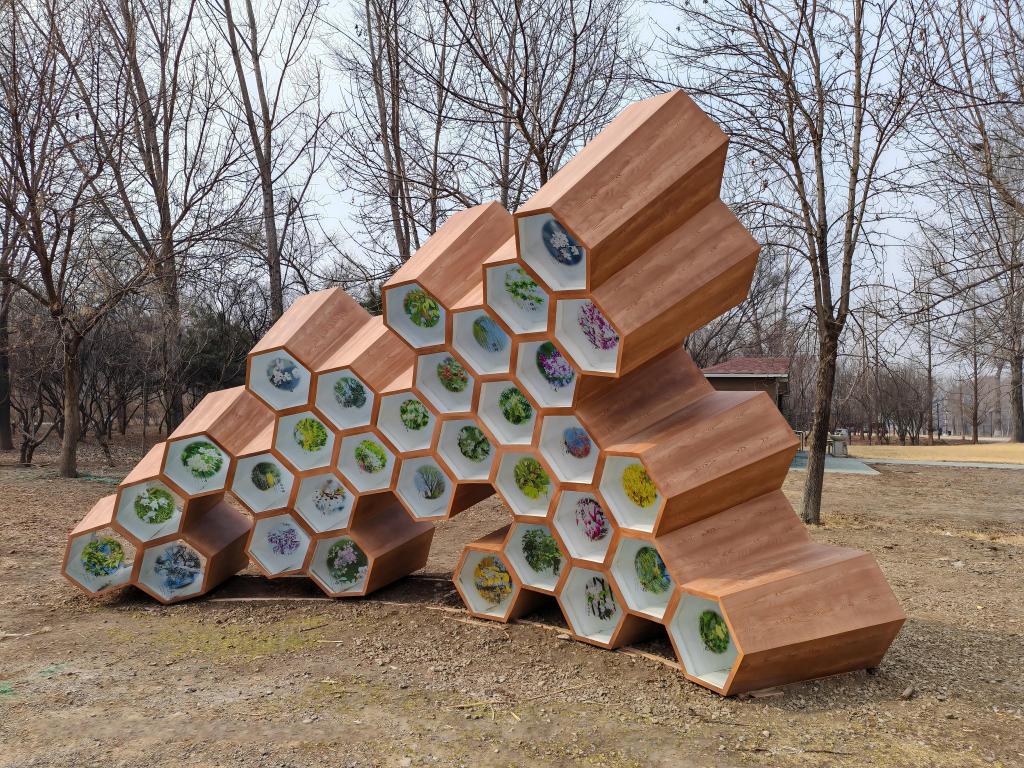
In terms of design style, the team balanced ecology with aesthetics. The facilities were constructed using environmentally friendly and durable native materials. Their colors harmonized with the natural landscape of reeds, water surfaces, and vegetation, avoiding excessive decoration that could interfere with the ecological environment. Meanwhile, characteristic elements of Hanshiqiao Wetland, such as the shapes of reeds and bird silhouettes, were integrated into the design. This ensures that the science popularization facilities serve not only as carriers of knowledge but also as organic parts of the wetland landscape, achieving the effect of "a new view with every step and a piece of knowledge with every sign."
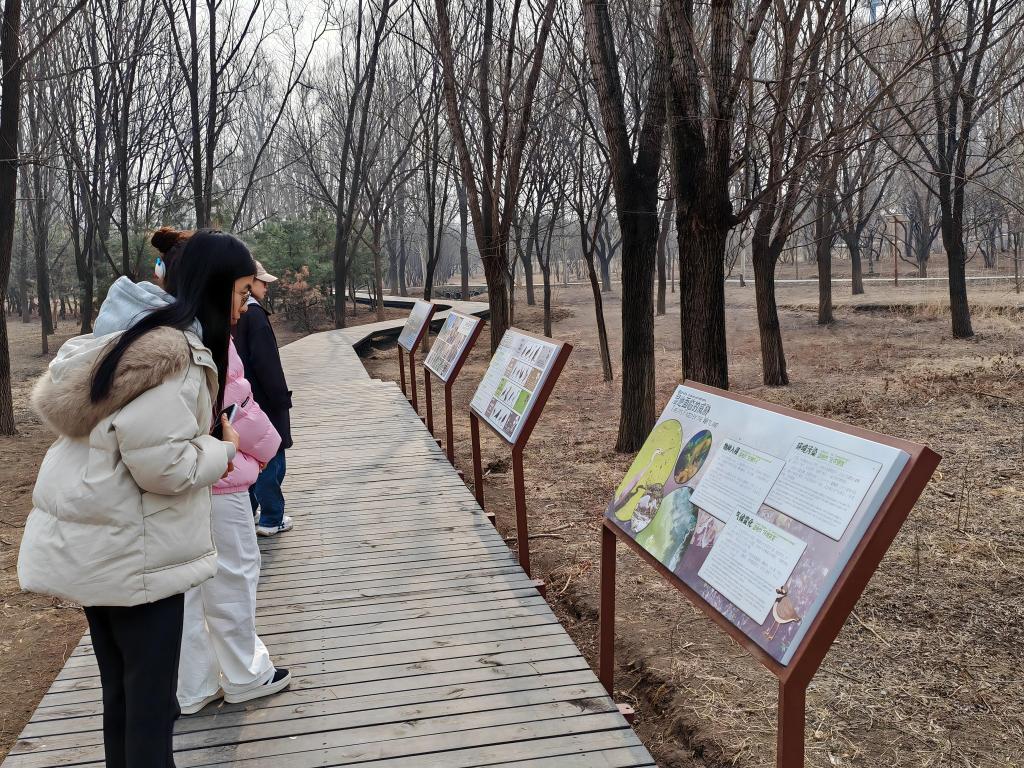
Zhou Baofen, a party group member of the Hanshiqiao Wetland Management Center, introduced that the implementation of these installations has further improved the reserve's public education and ecological service facilities. It provides crucial support for conducting ecological science activities, enhancing public engagement, and raising environmental awareness. With the facilities now in use, the public can more effectively learn about wetland ecology while enjoying leisure activities, helping to foster a positive atmosphere of "everyone participating in wetland protection and jointly building a green ecological home."
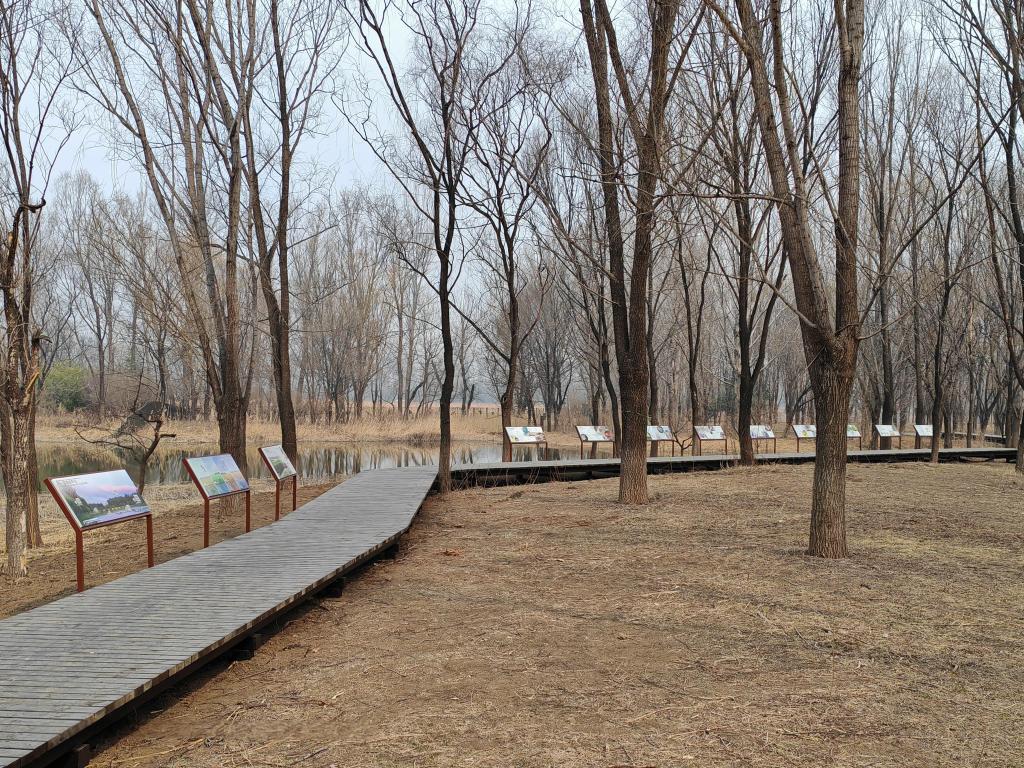
As the only large-scale reed swamp wetland in the Beijing plain area, Hanshiqiao Wetland is known as the "Little Baiyangdian in Beijing's suburbs." It carries important ecological functions such as climate regulation, water conservation, and biodiversity protection, serving as a vital stopover for migratory birds. As responsible planners for the wetland, Yang Yichen and Liu Rui have been deeply engaged in wetland planning and ecological protection for years. The newly completed science education facilities integrate wetland ecological knowledge, conservation history, and protection concepts into the landscape. This builds a professional yet engaging science communication bridge for this "Great Reed Marsh in Eastern Beijing," helping the benefits of wetland protection reach more people. Furthermore, the design and implementation were jointly completed by teachers leading students, serving as a typical example of our university's integration of industry and education and practice-based learning. It is also a vivid practice of faculty and students upholding the people-centered development philosophy and serving regional development.