Recently, a delegation from WMG at the University of Warwick, led by its newly appointed Dean Kerry Kirwan, visited Beijing City University (BCU). Liu Lin, President of BCU, and Guo Guangsheng, Director of the Academic Committee, accompanied the delegation on field visits and symposiums in Haidian District and BAIC Group. The parties held in-depth discussions on topics such as international industry-university-research collaboration, global talent development, and interdisciplinary innovation, further consolidating the foundation for long-term cooperation between the two institutions.
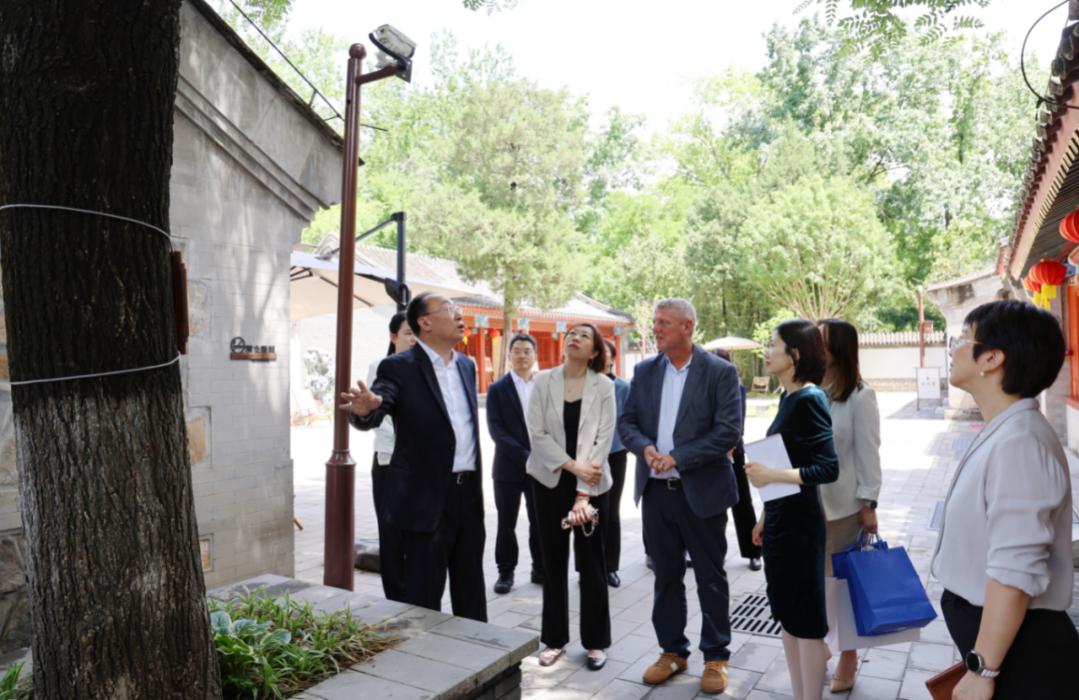
Zhang Ge, Secretary of the Haidian District Committee of the CPC, and Ma Guangyao, Member of the Standing Committee and Executive Deputy District Mayor, received the delegation at the Yongshan Residence, a traditional courtyard showcasing Beijing’s cultural heritage. Relevant officials from the District Government's Foreign Affairs Office and the Zhongguancun Science City Management Committee also attended the exchange.
Zhang Ge welcomed the delegation and provided a detailed introduction to Haidian District's industrial layout and its abundant science, education, and research resources. He noted that Haidian District boasts outstanding capabilities in opening up. He expressed the hope that, building upon the solid foundation of cooperation between BCU and WMG, and leveraging the district's strengths in high-end sci-tech innovation, the two sides could establish international channels for scientific and technological cooperation. He also called for deepening the integration of industry, academia, and research, as well as collaborative innovation, to implement more pragmatic cooperative projects. Prof. Kerry Kirwan highly praised Haidian District's comprehensive AI innovation ecosystem and industrial development achievements. He expressed his expectation to work with Haidian District through the BCU cooperation platform to explore new models for integrating industry, academia, research, and application.
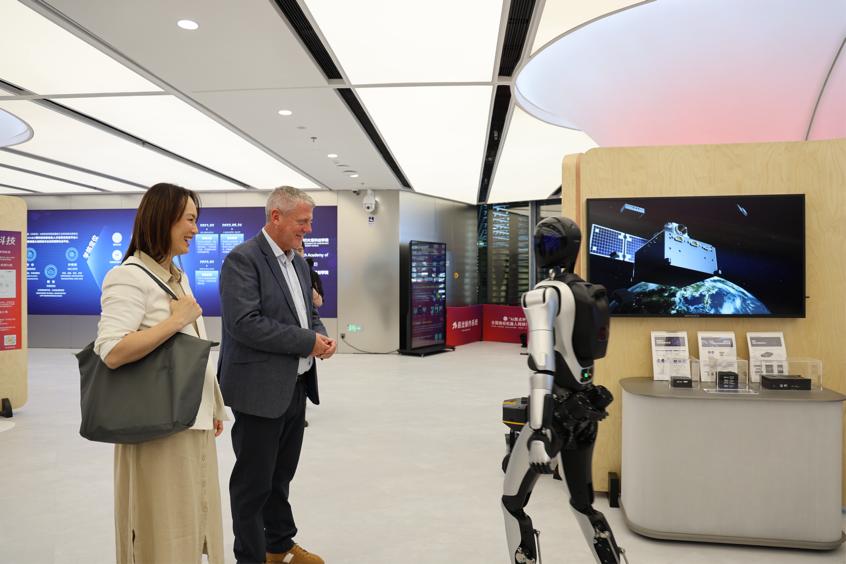
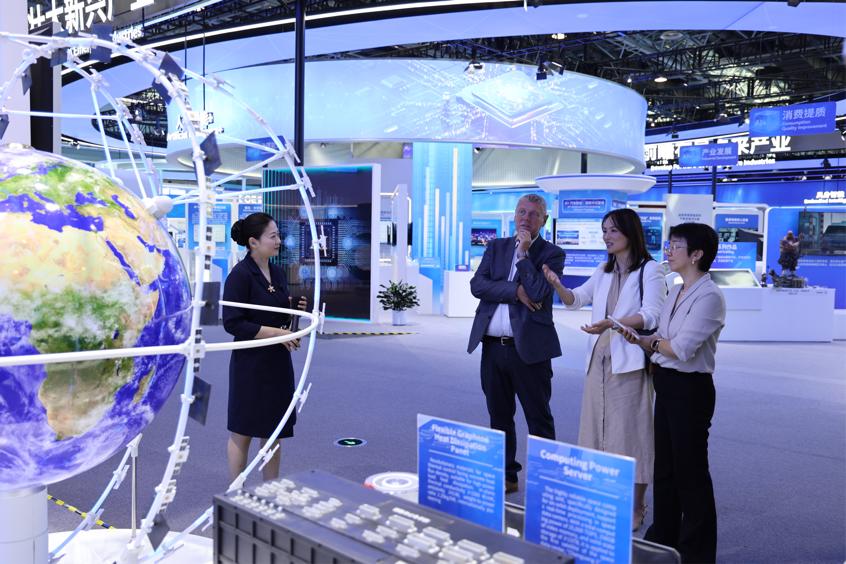
Prior to the symposium, the delegation conducted on-site research on Haidian's sci-tech innovation platforms. They visited the AI Origin Community to observe practical AI application scenarios, including service robots by Galaxy General and smart retail cabins for tea and ice cream. They also visited the Exhibition Center of the Zhongguancun National Independent Innovation Demonstration Zone to gain a comprehensive understanding of cutting-edge sci-tech achievements in Beijing and Haidian District, experiencing firsthand the vitality of China's innovative industries.
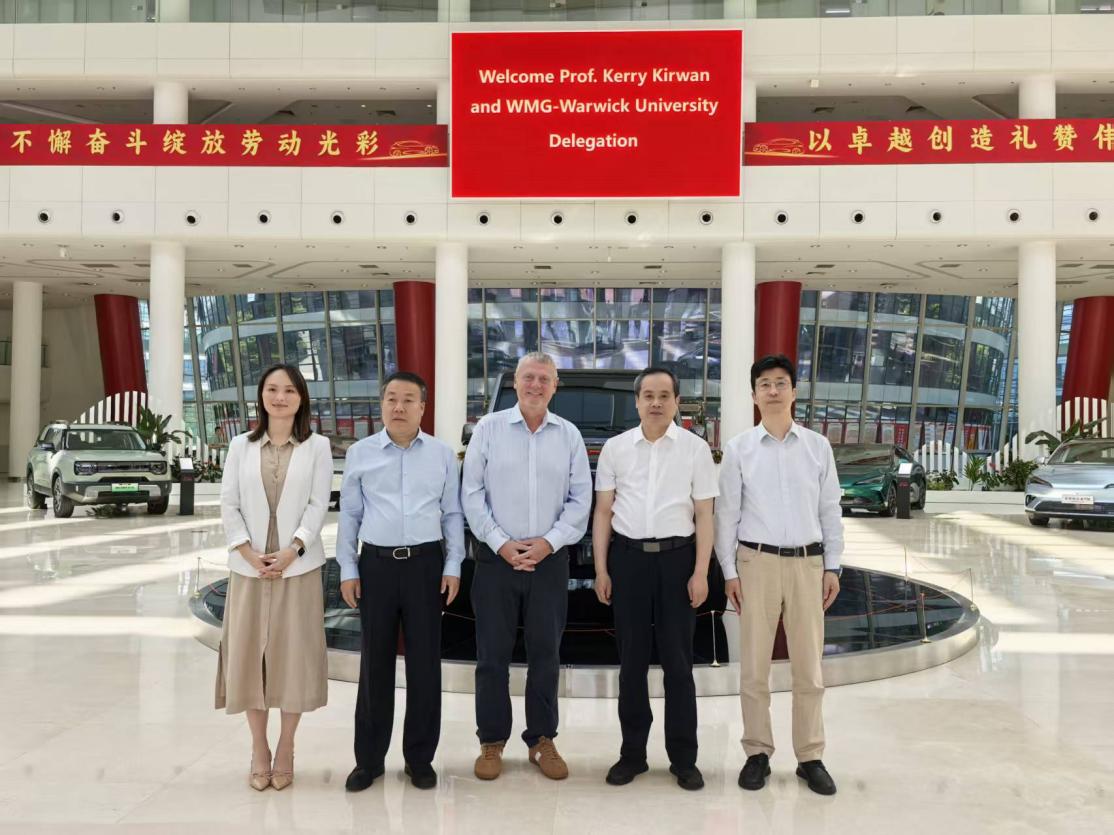
Subsequently, the delegation visited BAIC Group's industrial R&D base for exchanges. Wang Jianping, the Director of BAIC Group, and technical experts from the Group's General Research Institute received the guests. The delegation conducted an in-depth study of cutting-edge technological systems, including independent vehicle R&D, automotive big data applications, whole-vehicle integration, and in-vehicle software management. They also observed new products and technologies in intelligent automobile manufacturing up close. Representatives from both universities and BAIC Group exchanged ideas on the intelligent upgrading of the automotive industry, the joint cultivation of high-end engineering talent, and the industrialization of research outcomes, establishing a cooperative framework for industry-university collaborative innovation.
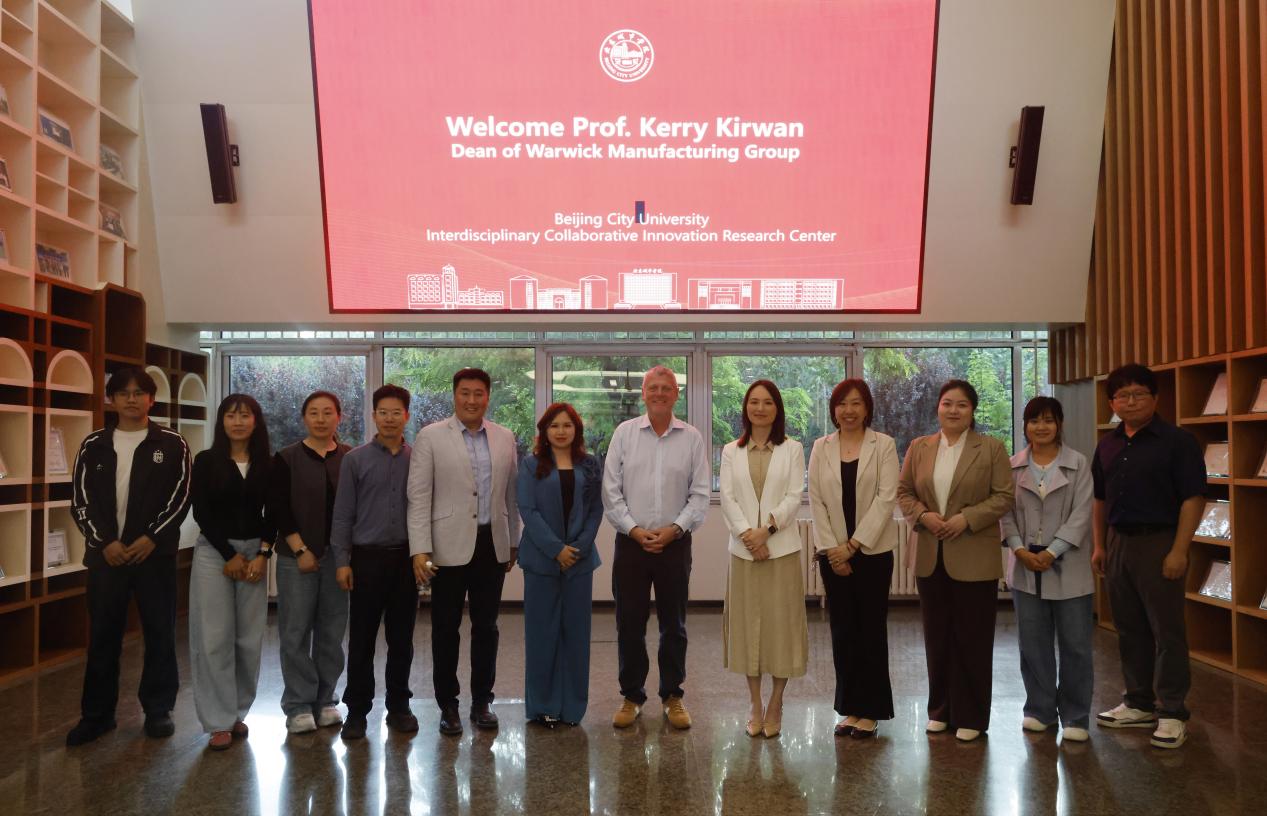
The delegation also visited BCU's Shunyi Campus to inspect the campus development and infrastructure. They toured the Interdisciplinary Collaborative Innovation Center, the School of Art and Design, the School of Cultural Heritage, and the Ye Shenglan Grand Theatre, conducting a detailed investigation into the university's interdisciplinary research platforms, industry-education integration, and distinctive cultural education initiatives.
Prof. Liu Lin systematically reviewed the strategic cooperation and tangible achievements between the two institutions over the past decade. He pointed out that since the joint Master's program under the Ministry of Education was launched in 2014, the two universities have cultivated over 200 international professionals, laying a solid foundation for cooperation. Building on these achievements, he expressed hope to expand collaboration into new dimensions, such as intelligent manufacturing, digital preservation of cultural heritage, and interdisciplinary innovation, to set a new benchmark for their partnership.
Prof. Kerry Kirwan fully recognized BCU's distinctive educational characteristics and development achievements, speaking highly of the long-term, stable cooperation between the two universities. He stated that as a top European institution for industry-education integration, WMG collaborates deeply with global industry leaders such as Airbus, Bosch, Jaguar Land Rover, and Siemens, boasting outstanding research capabilities in intelligent manufacturing, industrial big data, and new materials. Moving forward, WMG will integrate its premium resources to continuously deepen industry-university-research-application integration with BCU, jointly cultivating versatile, high-level talents equipped with international perspectives, innovative qualities, and practical skills.
Building on over a decade of cooperation, BCU and WMG will continue to advance pragmatic collaboration across multiple fields. This includes upgrading and expanding joint Master's programs, conducting joint research on frontier technologies, facilitating the industrialization of sci-tech projects, and promoting international industrial synergy, thereby creating a model project for cooperation between China and the UK in higher education and the advanced manufacturing industry.