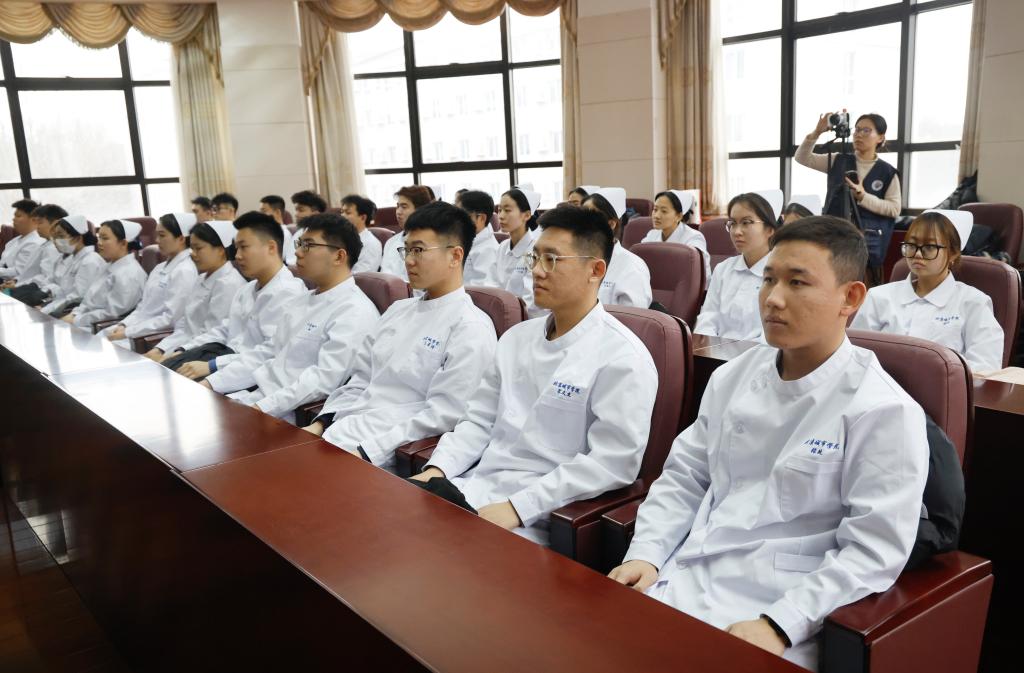
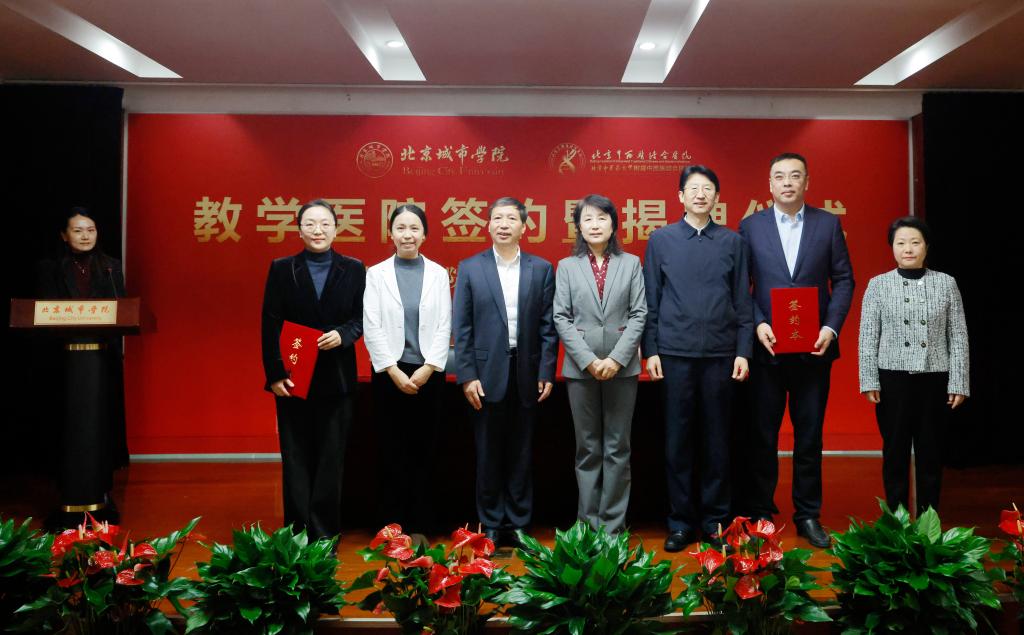
To deepen the integration of medical education and healthcare services, build a high-quality medical talent development system, and promote deeper synergy between medical education and clinical practice, the signing and unveiling ceremony for the establishment of the Teaching Hospital jointly by Beijing City University and Beijing Hospital of Integrated Traditional Chinese and Western Medicine was held on December 12 at BCU Hangtiancheng Campus.
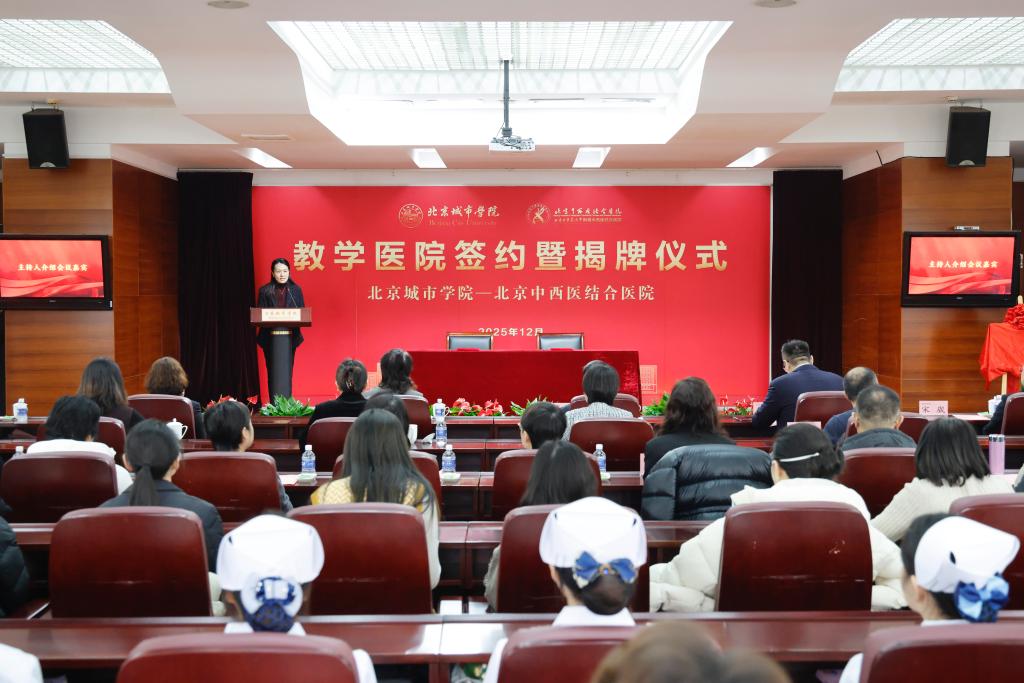
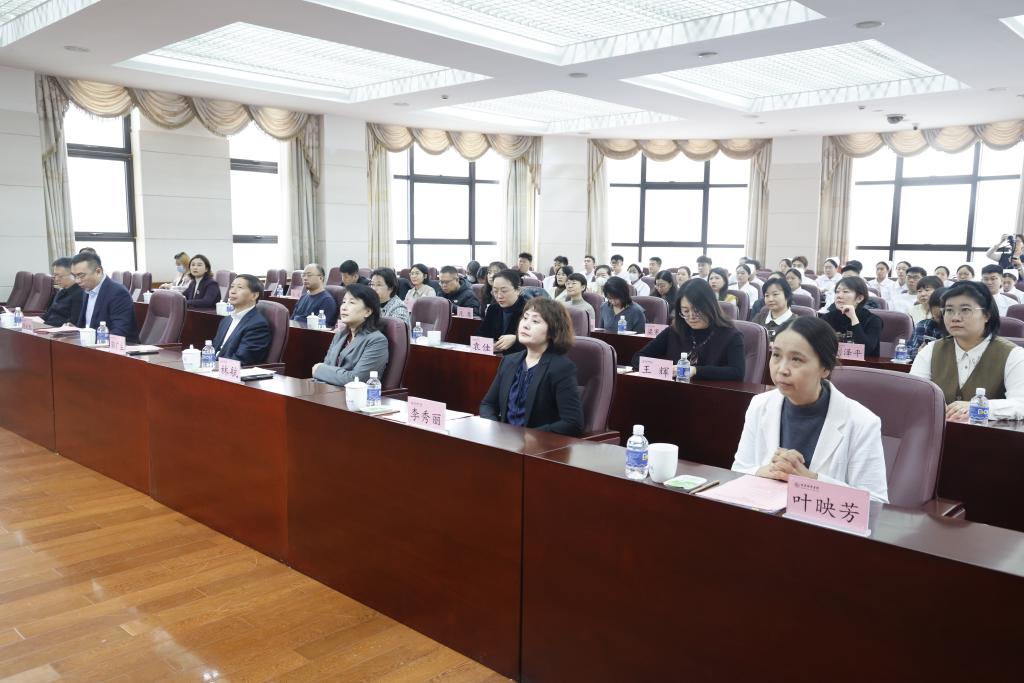
The ceremony was attended by distinguished guests including: Lin Hang, Vice District Mayor of Haidian District, Beijing; Li Jintao, Secretary of the Party Working Committee on Health and Director of the Haidian District Health Commission; Li Xiuli, Deputy Director of the Haidian District Health Commission; Han Yongpeng, President of Beijing Hospital of Integrated Traditional Chinese and Western Medicine; Zhang Jing, Vice President of the hospital;Song Wei, Principal of Beijing Haidian Health School.
Representing BCU were Guo Guangsheng, Chair of the Academic Committee of BCU; Ye Yingfang, Vice Chair of University Council; Yuan Jia and Zhang Huiying, Vice Presidents; along with heads of relevant academic divisions. Faculty and student representatives from the School of Biomedicine and the School of Public Administration also participated in the event.
The ceremony was presided over by Zhang Huiying.
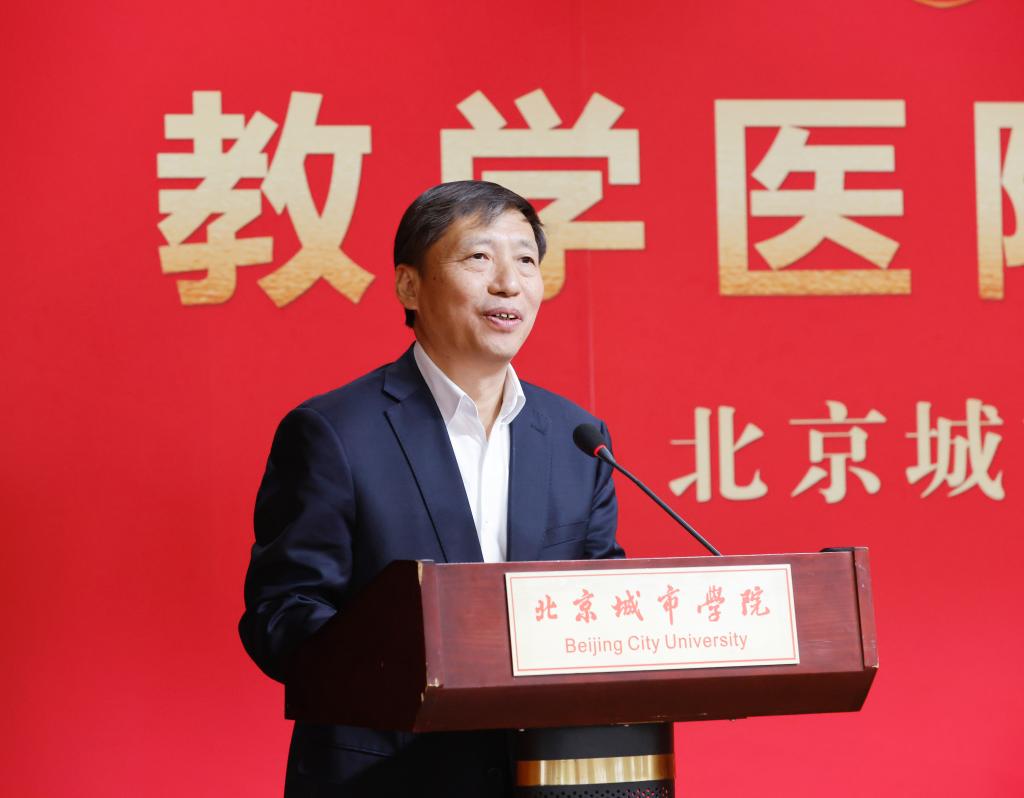
In his speech, Guo Guangsheng highlighted BCU's distinctive strengths in key areas such as the inheritance and innovation of Traditional Chinese Medicine (TCM), nursing, and rehabilitation therapy. He emphasized that partnering with Beijing Hospital of Integrated Traditional Chinese and Western Medicine to co-establish a teaching hospital represents a significant step toward implementing an integrated model of medical education, industry collaboration, and interdisciplinary talent development.
Looking ahead, he stated that BCU will focus on the health and well-being of “the elderly and the young” (“one old, one young”)—leveraging its institutional flexibility and multidisciplinary advantages to foster cross-disciplinary integration among artificial intelligence, TCM, neuroscience, psychology, education, and gerontology. The goal is to build two innovative “Education-Medicine-Research-Industry-Community” consortia: one centered on TCM-based elderly care and wellness, and the other on child mental and cognitive development. Through these initiatives, the university aims to make new contributions to delivering higher-quality, more accessible health services for the public.
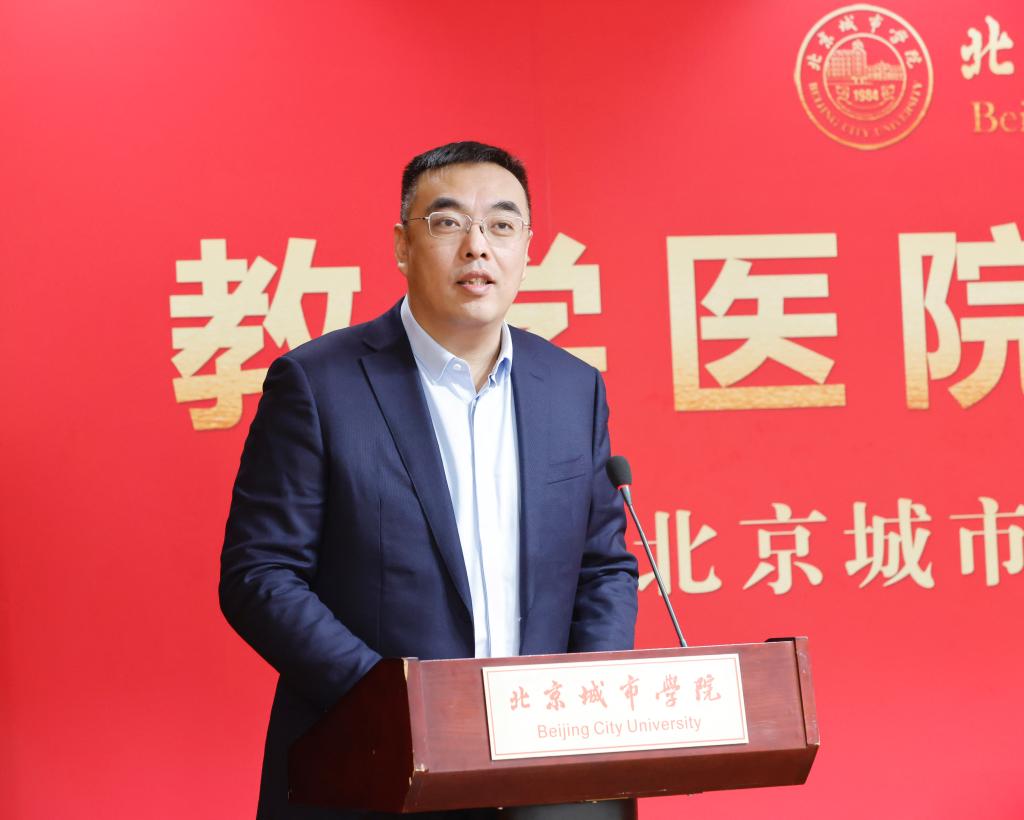
In his address, Han Yongpeng stated that the hospital is fully committed to fulfilling its roles as: a solid platform for clinical practice, a nurturing ground for “dual-qualified” (clinician-educator) talent, and an explorer of integrated innovation.
He emphasized that the hospital and BCU will work in close synergy to build an integrated “medical care–teaching–research” development system, jointly engaging in end-to-end talent cultivation—from undergraduate to postgraduate education—to contribute meaningfully to the advancement of healthcare and medical education in Beijing and across the nation.
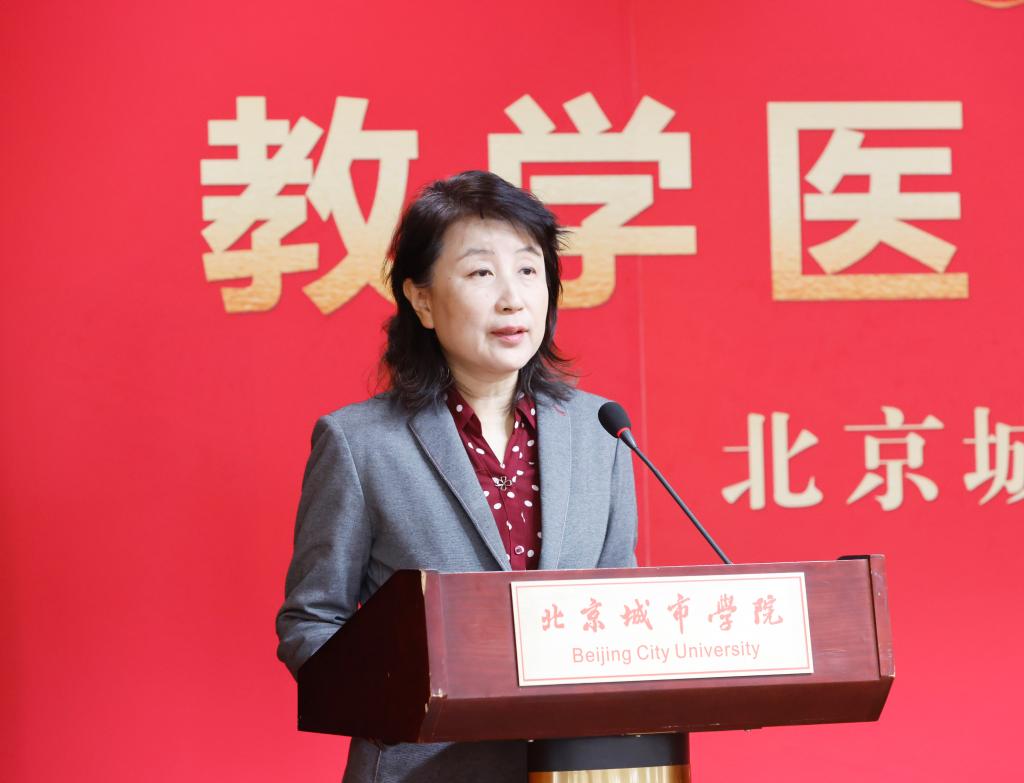
Lin Hang, on behalf of the Haidian District People's Government, extended warm congratulations on the successful partnership between the two parties. She emphasized that healthcare and education are fundamental pillars of urban development and core drivers of the “Healthy Haidian” initiative. This deepened collaboration, she noted, exemplifies Haidian's commitment to advancing medical-educational integration and will serve as a key lever for promoting high-quality development in the district's health and wellness sector.
She expressed her hope that both parties will continue to refine their co-construction mechanisms, intensify innovation in collaborative models, and jointly build distinctive, high-impact programs in areas such as educational articulation, research-to-practice translation, discipline co-development, and talent sharing. By doing so, they can make even greater contributions to public health and regional socioeconomic advancement.
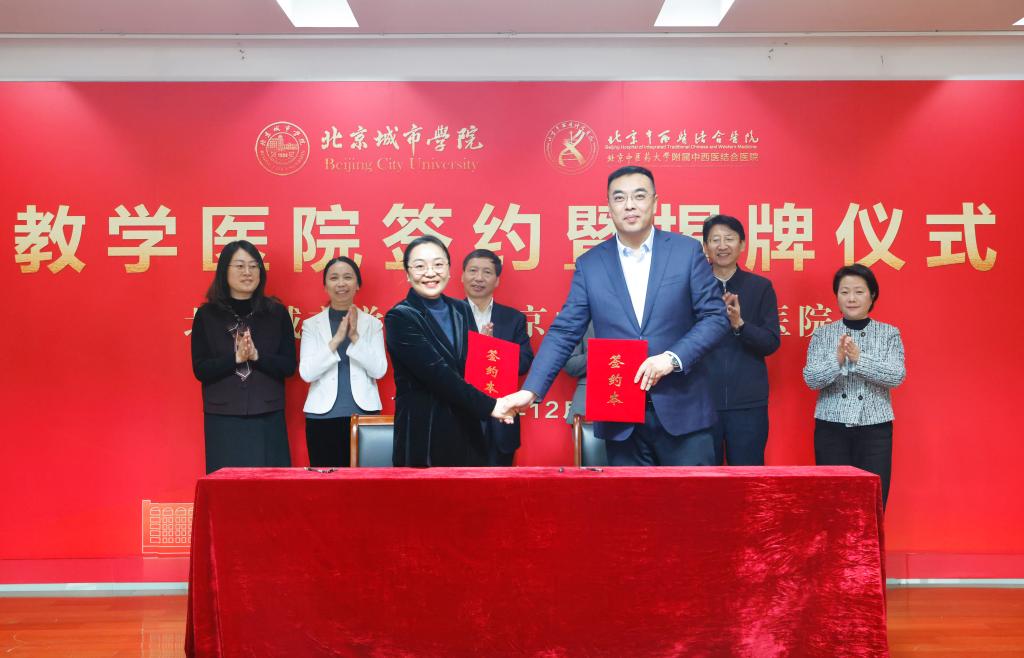
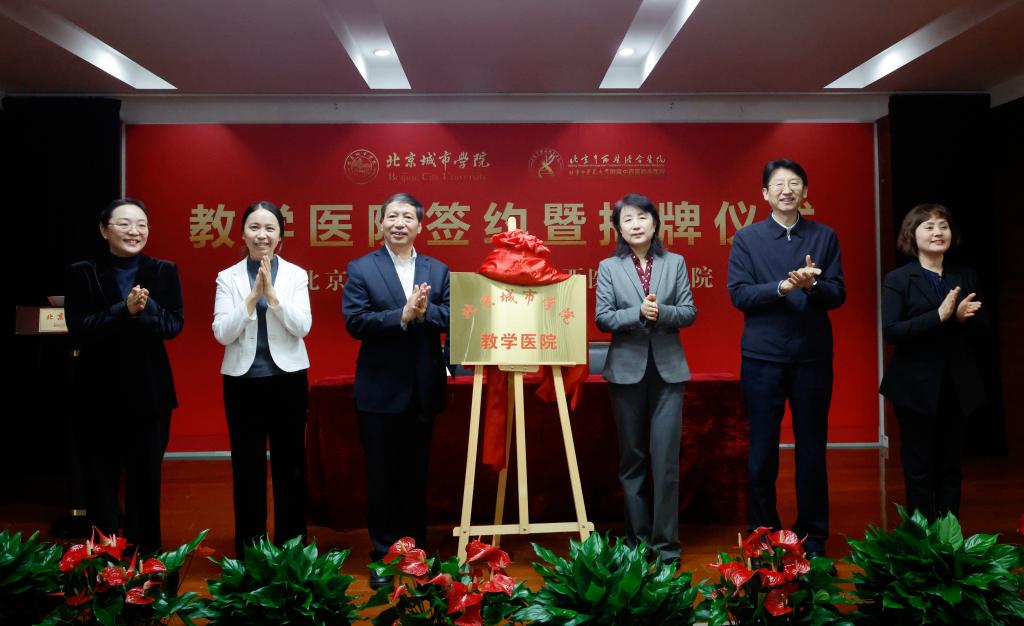
Subsequently, Yuan Jia and Han Yongpeng jointly signed the Teaching Hospital Cooperation Agreement. Lin Hang and Guo Guangsheng then unveiled the plaque for the “Beijing City University–Beijing Hospital of Integrated Traditional Chinese and Western Medicine Teaching Hospital,” marking the formal establishment of a stable and in-depth collaborative partnership between our university and the hospital.
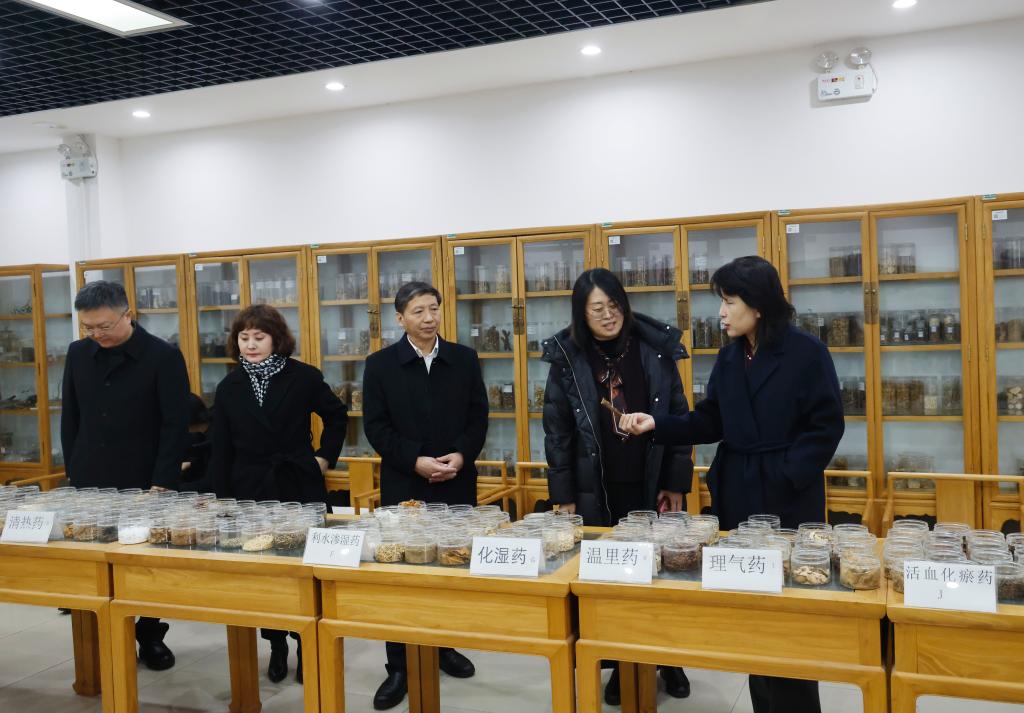
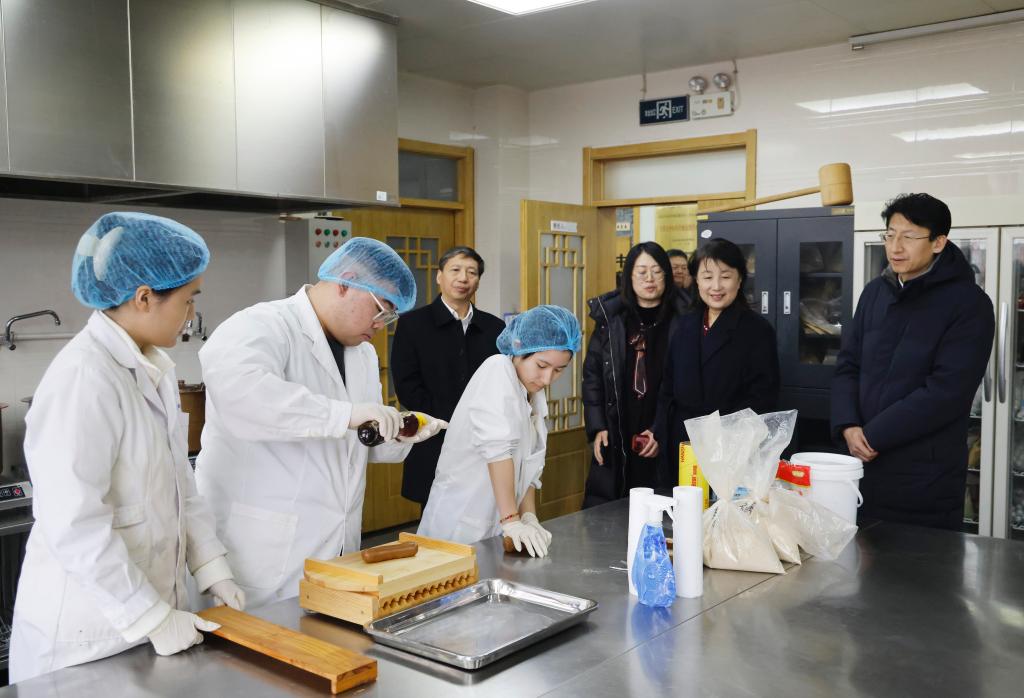
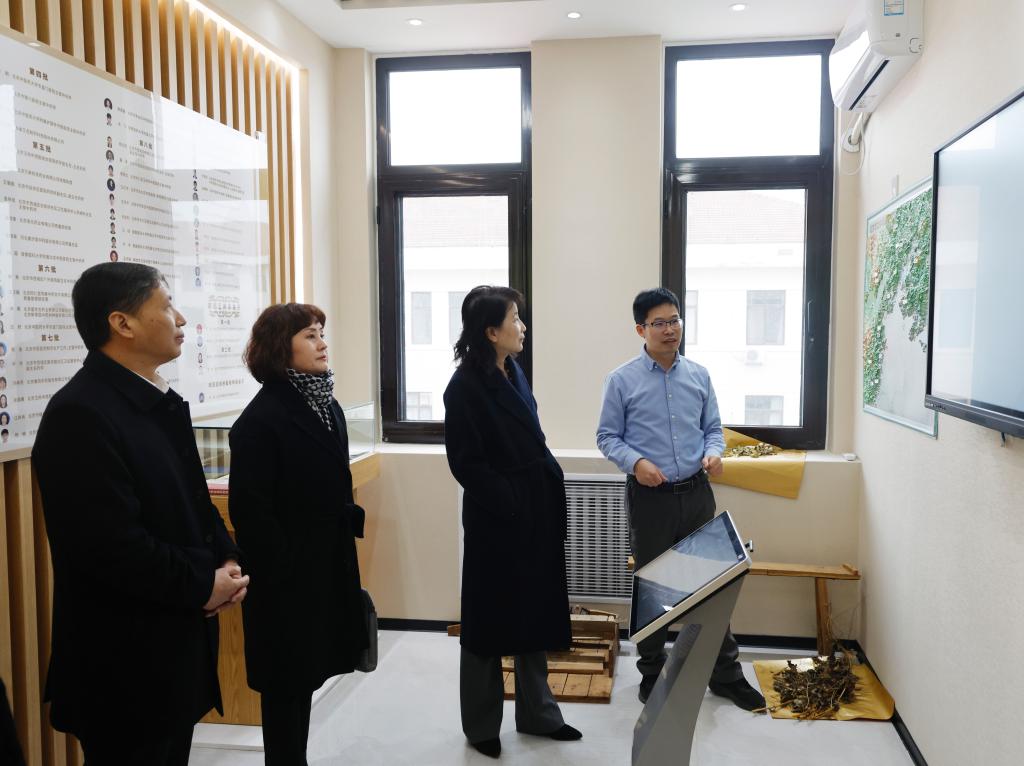
The successful signing and unveiling ceremony marks a vivid demonstration of the university–hospital partnership in actively implementing the national “Healthy China” strategy, injecting strong momentum into the high-quality development of our medical education.
Moving forward, both parties will pursue comprehensive and synergistic collaboration in talent cultivation, discipline development, and scientific research. By deepening the integration of medical practice and education, they aim to nurture a new generation of outstanding medical professionals who excel in both ethics and expertise. This partnership will serve as a solid pillar in advancing Beijing’s healthcare and medical education landscape, opening a new chapter in university–hospital collaborative development.