Recently, Beijing City University (BCU) delegation visited Kazakhstan for an educational exchange themed around Belt and Road Initiative (BRI) cooperation in higher education. Led by Prof. Meng Yuan, Dean of School of Urban Construction of BCU, the visit focused on fostering industry–academia–research collaboration in architecture and advancing China-Kazakh higher education partnerships.
During their visit, the delegation first traveled to Nuctech’s Kazakhstan subsidiary, where they met with company executives to discuss the feasibility of architectural design proposals for land-border inspection stations and conducted an on-site inspection of the China–Kazakhstan preferential loan (Youdai) project. In their talks, both sides reached a preliminary consensus on enhancing educational collaboration, including facilitating student internships and study opportunities in Kazakhstan.
The delegation then visited Al-Farabi Kazakh National University, where they met with Mr. Yesbol, Director of the Office of International Affairs. The two sides exchanged introductions about their respective institutional strengths and engaged in constructive discussions on potential areas of future cooperation, laying the groundwork for concrete collaborative initiatives.
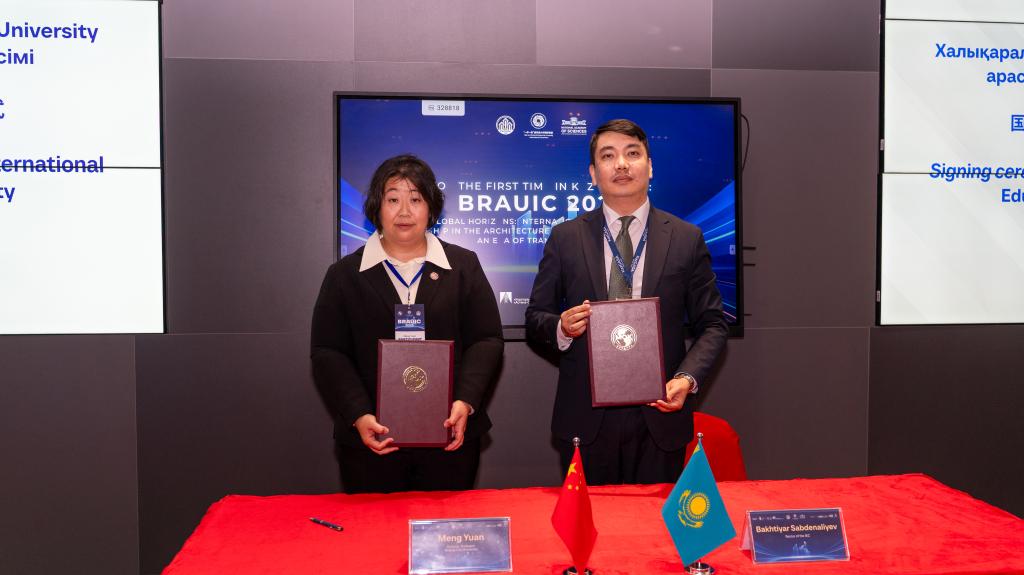
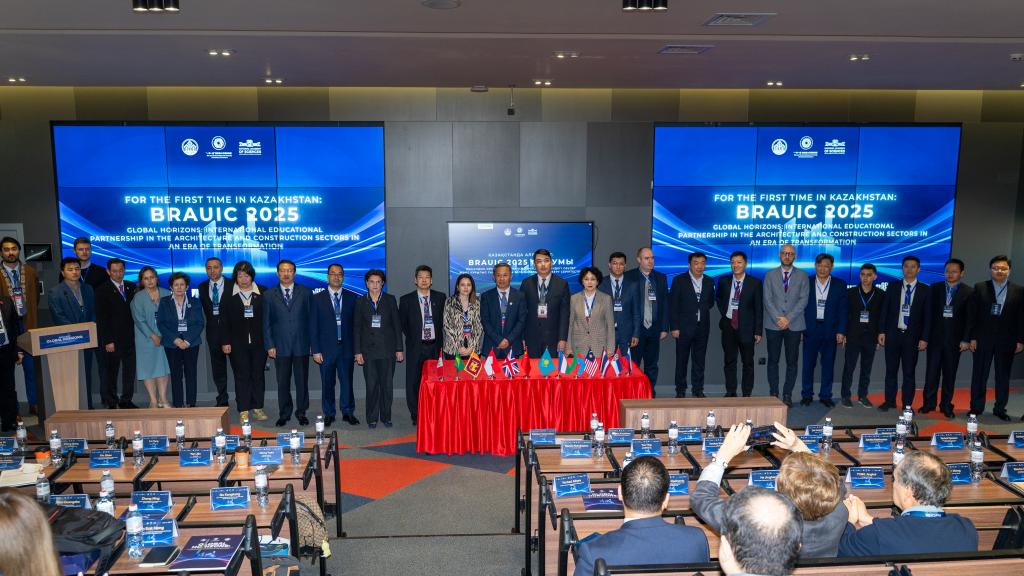
A key highlight of the trip was the delegation’s participation in the 2025 Annual Meeting of the Belt and Road Architecture University International Consortium (BRAUIC), hosted by the Kazakh National University of Architecture and Civil Engineering (KNUACE). During the event, Prof. Meng Yuan and Prof. Bakhtiyar Sabdenaliyev, Rector of KNUACE, signed a Memorandum of Understanding (MoU), formally establishing an institutional partnership between the two universities. The delegation also toured KNUACE’s teaching laboratories to gain firsthand insight into its educational facilities and student development model.
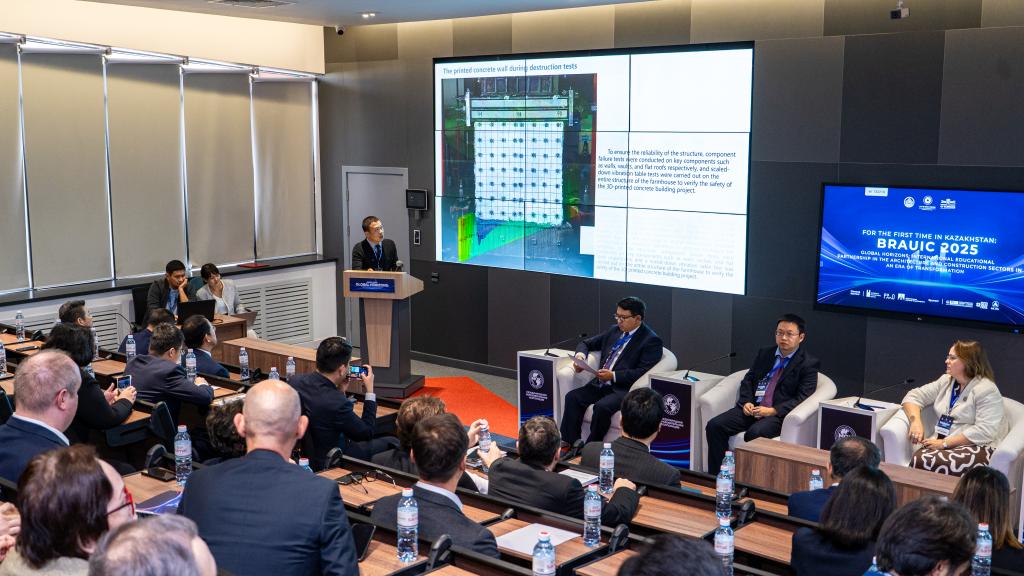
At the concurrent BRAUIC International Forum, Dr. Zuo Jie, a faculty member in Department of Architecture of BCU, delivered a keynote presentation titled “Intelligent Construction Methods for Remote Regions of Kazakhstan.” Prof. Meng Yuan attended the consortium’s closing session, joining representatives from member institutions in discussions on strategic priorities for future collaboration. The forum also featured the inauguration of the Luban Global School and the official launch of the Global Digital Heritage Conservation Platform.
This visit has significantly strengthened ties between our university and Kazakhstani institutions. Both sides agreed to build upon this momentum to deepen substantive cooperation in talent development, joint research, and academic program enhancement—jointly contributing to educational exchange and infrastructure advancement between China and Kazakhstan under the Belt and Road framework.